

Wondering how much it costs to epoxy your garage floor? The price can vary, but understanding the factors can help you budget effectively.
In this article, we will explore the cost to epoxy garage floor and the factors that influence pricing. You’ll learn how garage size, type of epoxy, and professional vs. DIY installation affect the total cost of your project.
The size of your garage plays a significant role in the cost to epoxy garage floor. Larger spaces require more materials and labor, which directly affects the total cost. For example, an average two-car garage (around 400 square feet) will have a different price range than a smaller or larger garage.
The type of epoxy you choose is another key factor in determining the overall cost. There are several options available, each with its own price point:
● Water-Based Epoxy: This is the most affordable option, typically costing between $1.15 to $2.25 per square foot. While it's budget-friendly, it doesn't provide the same level of durability as other types.
● 100% Solid Epoxy: The most durable and long-lasting option, this type of epoxy costs around $3.60 per square foot. It’s ideal for high-traffic areas or spaces with heavy vehicle use.
● Metallic Epoxy: Known for its stunning, marble-like finish, metallic epoxy costs between $9 to $12 per square foot. It’s more expensive due to its decorative nature and requires skilled labor.
● Flake Epoxy: Flake epoxy is a popular choice for garages, providing a non-slip surface. It costs between $5 and $10 per square foot, depending on the complexity of the project.
Epoxy Type | Cost per Square Foot | Durability | Best For |
Water-Based Epoxy | $1.15 - $2.25 | Low | Light-duty spaces, DIY |
100% Solid Epoxy | $3.60 | High | High-traffic areas, garages |
Metallic Epoxy | $9 - $12 | Very High | Decorative, high-end spaces |
Flake Epoxy | $5 - $10 | Moderate | Garages, non-slip surfaces |
The condition of your concrete floor significantly influences the overall epoxy flooring cost. If your garage floor is cracked, stained, or uneven, it will need extra work before applying the epoxy. This can include:
● Power Washing: To clean the floor and remove dirt, grease, and old coatings, power washing typically costs around $0.35 to $0.77 per square foot.
● Grinding or Etching: If the surface is rough, grinding or etching is required to create a smooth base for the epoxy. This can cost anywhere from $1 to $5 per square foot.
● Repairs: Cracks or imperfections in the concrete must be patched, which can add additional costs of $25 to $250, depending on the severity of the damage.
The better the condition of your concrete, the less you’ll spend on surface preparation.
For most epoxy garage floor installations, two coats are standard. However, if you are opting for a high-end finish such as metallic or flake epoxy, additional layers may be needed, which will increase the cost by $1 to $3 per square foot.
If you're adding decorative elements like metallic pigments or decorative flakes, expect to pay more. These customizations not only improve the aesthetics but also affect the price.
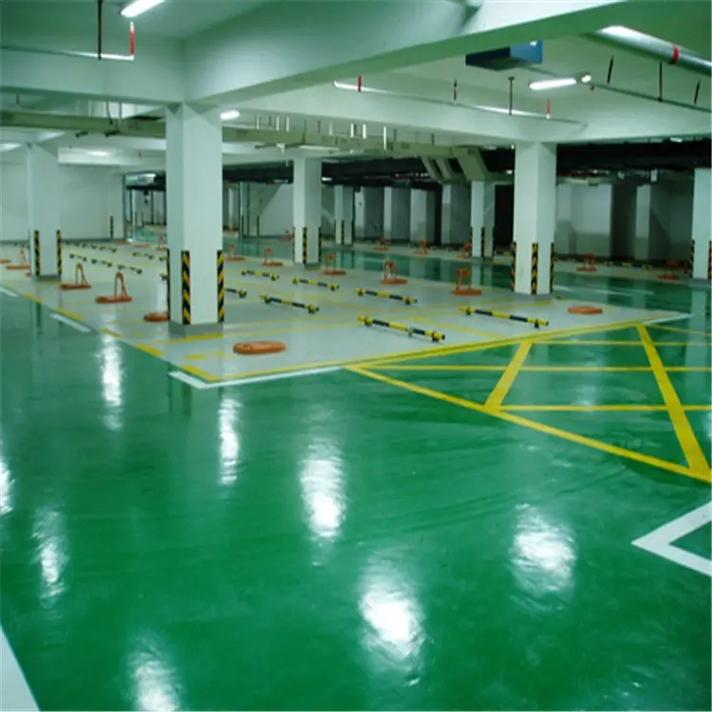
On average, the cost to epoxy a garage floor ranges from $3 to $12 per square foot. For an 800 square foot garage, you can expect to spend between $2,400 and $9,600, depending on the type of epoxy and the amount of surface preparation required. Here’s a breakdown of typical pricing:
● Residential Garage: A typical two-car garage (about 400 square feet) can cost between $1,600 and $5,800 to epoxy. For larger areas like a 3-car garage, the cost increases accordingly.
● Basement: For larger spaces such as basements, the cost can range from $3,000 to $12,000, depending on size and the condition of the floor.
● Kitchen: Kitchen flooring costs range from $400 to $2,000, depending on the epoxy type chosen.
In addition to the base cost to epoxy garage floor, there are other expenses that can add up:
● Garage Floor Resurfacing: If the floor requires resurfacing or repairs, this could cost an additional $1 to $3 per square foot.
● Sealing: After applying the epoxy coating, sealing the floor will help extend its lifespan. The sealing cost ranges between $0.50 to $2 per square foot.
DIY installation can save on labor costs, but it requires the right tools and expertise. DIY epoxy kits typically cost between $100 and $500, depending on the size of the area.
However, hiring a professional guarantees a smoother and more durable finish. Professional installation costs range from $4 to $10 per square foot, which includes materials, labor, and any surface preparation. While professional installation costs more upfront, the results are usually longer-lasting, and there is a reduced risk of errors.
Option | Cost per Square Foot | Benefits | Considerations |
DIY Epoxy Kit | $1.50 - $2.50 | Low upfront cost | Requires skill, may lack durability |
Professional Install | $4 - $10 | Flawless finish, long-lasting | Higher initial cost, expert results |
If you’re looking to cut down on costs, doing the work yourself can save money on labor. Here are a few tips:
● Surface Prep: Handle the cleaning, power washing, and minor repairs yourself to save on labor costs.
● Opt for Water-Based Epoxy: It’s the most affordable option for residential areas, although less durable than 100% solid epoxy.
● Shop for Materials: Buy materials directly from suppliers or in bulk to reduce overall costs.
If you prefer professional help, here are a few tips to get the best deal:
● Get Multiple Quotes: Always request multiple estimates to compare prices and services.
● Consider Local Contractors: Local professionals often offer more competitive rates than larger, national companies.
● Discuss Your Budget: Be upfront about your budget with contractors and ask for recommendations on affordable epoxy options.
When considering cost to epoxy garage floor vs. painting the floor, epoxy is generally more expensive. Painting usually costs between $0.50 and $2 per square foot, while epoxy ranges from $3 to $12 per square foot. However, epoxy flooring offers superior durability, resistance to stains and chemicals, and longer-lasting results.
Replacing a garage floor is more expensive than applying an epoxy coating. The cost to replace a garage floor ranges from $4 to $15 per square foot, whereas epoxy flooring is a more budget-friendly option. Epoxy is a great solution for improving the appearance and functionality of your garage without the need for a complete replacement.
For a 800 square foot garage, here’s an estimated breakdown of the cost to epoxy garage floor:
● Materials: $1,200 to $3,200 (depending on the type of epoxy).
● Labor: $1,600 to $4,800 (for professional installation).
● Additional Costs: Surface preparation ($0.35 to $5 per square foot) and sealing ($0.50 to $2 per square foot).
The cost of epoxy flooring can vary by location due to labor and material availability. Here’s a general breakdown of the cost range by city:
Location | Cost Range (Materials and Labor) |
Chicago, IL | $1,685 to $2,825 |
Dallas, TX | $1,340 to $2,440 |
Los Angeles, CA | $1,395 to $3,010 |
Miami, FL | $1,240 to $2,685 |
New York City, NY | $1,705 to $3,720 |
The cost to epoxy garage floor can range between $1,000 and $3,000, depending on factors like size and type of epoxy. Understanding these variables can help you plan your budget. CNMI Industrial Corporation offers high-quality epoxy products that ensure durability and longevity, providing excellent value for your investment. Their expert guidance ensures you achieve the best results for your flooring project.
A: The cost to epoxy garage floor typically ranges from $1,000 to $3,000 for a standard two-car garage. Factors like epoxy type and surface prep can influence the final price.
A: Cost to epoxy garage floor can vary based on the size of the garage, the condition of the floor, and the type of epoxy used. More durable types, like solid epoxy or metallic epoxy, cost more.
A: Yes, opting for DIY installation can save on labor costs, but make sure you have the right tools and expertise to avoid mistakes. DIY epoxy kits range from $100 to $500.
A: Yes, epoxy flooring offers long-term durability, easy maintenance, and aesthetic appeal. It’s a cost-effective way to upgrade your garage floor compared to a full replacement.

