

Do you know the difference that the right footwear can make when applying epoxy flooring? Choosing the wrong shoes can lead to costly mistakes or even injury.
In this article, we will focus on how to choose the best spiked shoes for epoxy flooring. You’ll learn why these shoes are essential, how to select the right features, and what to look for to achieve a flawless finish. By the end, you’ll be equipped to make an informed decision for your next flooring project.
Applying epoxy to a floor requires careful attention to avoid disturbing the surface. Without the right footwear, you risk leaving footprints or creating other damage to the fresh coating. Spiked shoes for epoxy flooring solve this problem by evenly distributing your weight across the surface. The spikes on the shoes allow you to walk across the wet epoxy without leaving impressions, ensuring a clean, smooth finish.
This is especially important when you are applying decorative flakes or aggregates, as walking on the surface without proper footwear can cause uneven patches or disturbed flakes.
Epoxy coatings, while durable once set, can be slippery during application. Spiked shoes for epoxy flooring provide traction, making it safer to walk on wet surfaces. Without the added grip from the spikes, you risk slipping, which could cause injury or affect the quality of your work. The spikes help anchor you firmly to the floor, allowing for more controlled movements as you spread or roll out the epoxy.
This added stability is essential for ensuring that your application is smooth and professional, particularly in larger spaces where more movement is required.
Even application of epoxy is key to achieving a flawless result. Spiked shoes for epoxy flooring help to distribute the epoxy evenly by preventing air bubbles and ensuring that the coating is applied consistently. The spikes provide the necessary balance and pressure to prevent any interruptions in the layer of epoxy. This leads to a more polished and professional-looking finish that will last for years.
In fact, walking on the epoxy surface with spike shoes also helps eliminate air pockets, which can otherwise lead to imperfections in the cured coating.
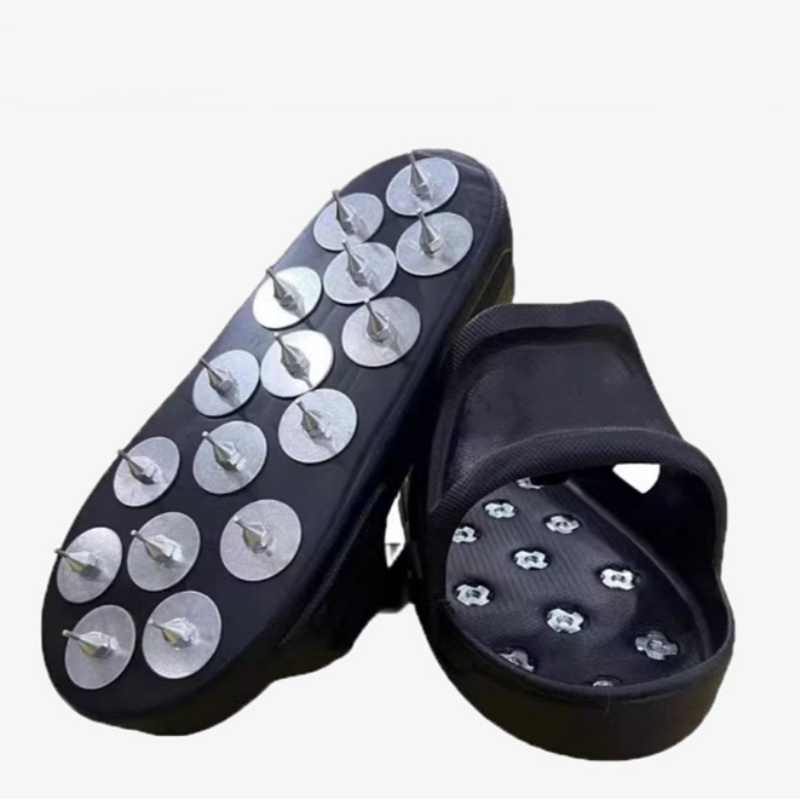
When selecting spiked shoes for epoxy flooring, material is an important factor to consider. Different materials offer unique benefits:
● Aluminum: Lightweight and durable, aluminum spiked shoes are perfect for general use, offering a good balance of affordability and performance.
● Steel: Steel spiked shoes are ideal for rugged surfaces and heavy-duty applications. They provide excellent durability but tend to be heavier than aluminum.
● Rubber: Rubber spiked shoes are non-slip, making them ideal for environments where comfort is prioritized. However, they are less effective for thicker epoxy layers.
Each material has its strengths and should be selected based on the project’s demands.
The size of the spikes is another important consideration. Smaller spikes (around 3/8-inch) are typically used for thin epoxy applications, while larger spikes (1/2-inch or more) are better suited for thicker epoxy layers. The right size spike ensures that you can walk over the wet epoxy without causing damage while still allowing for proper penetration to release air and prevent bubbling.
Choosing the correct spike size is crucial in determining the success of your application, as it directly impacts both the ease of use and the quality of the finish.
The pattern of the spikes on your shoes plays a significant role in the traction and balance you achieve. There are generally two common spike patterns:
● Grid Pattern: Provides even distribution of spikes, ensuring consistent coverage across the floor. This pattern is ideal for general epoxy applications.
● Chevron Pattern: Offers enhanced traction in multiple directions, which is useful when applying epoxy coatings in areas with higher risk of slipping. This pattern also helps reduce pressure on the coating, providing better overall surface protection.
Choosing the right pattern depends on the specific requirements of your project. For example, if you are working on larger projects or areas that need greater stability, chevron spikes may be the better choice.
Comfort and fit are crucial for maximizing the performance of spiked shoes for epoxy flooring. Ill-fitting shoes can cause discomfort and even lead to accidents, as they may increase the risk of tripping or slipping. Make sure your spiked shoes fit snugly without being too tight. It’s also important to consider using anti-fatigue insoles for extended periods of work, as this will help reduce stress on your feet and legs.
By focusing on comfort, you’ll be able to work for longer hours without experiencing discomfort, which leads to better productivity and a smoother application process.
Feature | Aluminum Spiked Shoes | Steel Spiked Shoes | Rubber Spiked Shoes |
Weight | Lightweight | Heavy-duty | Non-slip |
Durability | Moderate | Excellent | Good |
Spike Penetration | Good | Excellent | Limited |
Traction | Adequate | Superior | Good |
Cost | Affordable | Moderate | Expensive |
Aluminum spiked shoes are a popular choice for many professionals due to their lightweight nature. They are particularly useful for general epoxy applications, providing the necessary traction and support without being too heavy on your feet. These shoes tend to be less expensive than steel options, making them a cost-effective solution for most projects.
Their versatility makes them suitable for both small-scale DIY tasks and larger commercial projects.
Steel spiked shoes are built for durability and strength, making them ideal for heavy-duty applications. They provide superior traction and are perfect for use on rugged or rough surfaces. The added weight can make these shoes slightly less comfortable for extended use, but they are essential for larger, more demanding epoxy projects.
These shoes are particularly well-suited for contractors working on large commercial or industrial jobs.
Rubber spiked shoes are designed for comfort and non-slip functionality. While they may not penetrate thick epoxy layers as effectively as steel or aluminum, they are a great option for areas that require more flexibility and comfort. The non-slip rubber sole provides excellent grip, making these shoes a good choice for residential or lighter-duty applications.
If you prioritize comfort over heavy-duty functionality, rubber spiked shoes are an excellent choice.
Ensuring a snug fit for your spiked shoes for epoxy flooring is key to preventing discomfort and accidents. A loose fit can cause you to trip or shift positions unexpectedly, while overly tight shoes can lead to foot pain. Check that the straps are secure and that the shoes are adjusted properly before starting your work.
Consider wearing thicker socks or using insoles if you plan to work for long hours.
To maximize the lifespan and performance of your spiked shoes, it’s essential to clean them after each use. Epoxy can quickly build up on the spikes, reducing their effectiveness. Use a soft brush or cloth to clean the shoes, removing any leftover epoxy.
Additionally, inspect the spikes regularly for wear and tear. Sharpen or replace dull spikes to maintain optimal traction.
While spiked shoes for epoxy flooring improve stability, you should still use other safety equipment. Wear gloves and safety glasses when working with epoxy to protect your hands and eyes from irritation. Always ensure that the work area is free from debris and other hazards to minimize the risk of accidents.
Also, be cautious when walking on freshly applied epoxy, as the surface can still be slippery despite the added traction from the shoes.
There are numerous online platforms where you can purchase spiked shoes for epoxy flooring. Popular options include home improvement websites and specialized flooring tool retailers. Shopping online often offers the convenience of home delivery and a wider selection of brands and models to choose from.
In addition to online options, many specialty stores that cater to flooring contractors and industrial equipment offer spiked shoes for epoxy flooring. These stores may provide a more personalized shopping experience, where you can try on shoes or receive expert advice from knowledgeable staff.
CNMI Industrial Corporation provides high-quality spiked shoes for epoxy flooring that ensure a smooth, professional finish. These shoes help improve traction, prevent damage to the epoxy surface, and make the application process easier. By selecting the right spiked shoes, you can enhance both safety and efficiency during your project. Their durable products offer great value, making them an excellent choice for professionals and DIY enthusiasts alike.
A: Spiked shoes for epoxy flooring are special footwear designed with metal spikes to allow you to walk on wet epoxy without damaging the surface.
A: Spiked shoes for epoxy flooring provide stability and prevent footprints from forming on freshly applied coatings, ensuring a smooth finish.
A: Consider material, spike size, and fit when choosing spiked shoes for epoxy flooring. For thicker layers, choose larger spikes; for lighter layers, smaller spikes work better.
A: Yes, spiked shoes for epoxy flooring can be reused multiple times. Be sure to clean and maintain them for optimal performance.

