
2026-06-11 For aged colored EPDM granular floors with intact base structure, two mainstream renovation methods are widely adopted: colored adhesive (with color paste) coating and thin-layer EPDM particle resurfacing. This article compares their construction process, performance, cost, appearance and service life, analyzes respective strengths and weaknesses, and provides reference for reasonable scheme selection in actual projects.
Read More 
2026-06-10 Aged EPDM particle ground often suffers from loose particles, local shedding, surface fading and rough wear, while the base structure remains intact. Traditional resurfacing and overall renovation involve high costs and long construction cycles. This paper introduces a simple and efficient repair method using colored elastic adhesive. The process directly reinforces and renovates the original ground without removing valid EPDM particles. It realizes particle rebonding, surface sealing and color restoration in one construction procedure. The technology features simple operation, low cost and fast curing speed, which can effectively restore the flatness, wear resistance and appearance consistency of old EPDM venues. It is suitable for routine maintenance and medium and minor repair of kindergartens, community fitness grounds and park elastic pavements.
Read More 
2026-06-09 Traditional EPDM particle ground renovation usually adopts particle resurfacing or overall reconstruction, which has disadvantages such as high cost, long construction period and unnecessary material waste for slightly and moderately damaged old venues. Colored adhesive repair technology, as an efficient and targeted maintenance method for aged EPDM grounds, uses color-matched special elastic adhesive to penetrate, bond and seal the worn, loose and faded original particle layer. This technology can effectively solve common problems including particle shedding, surface voids, color fading and weak bonding without removing the original intact EPDM base material. This article elaborates on the repair principle and applicable damage scenarios of colored EPDM adhesive, analyzes its unique advantages compared with traditional renovation methods, introduces the standardized on-site construction steps in detail, and puts forward corresponding post-construction maintenance measures.
Read More 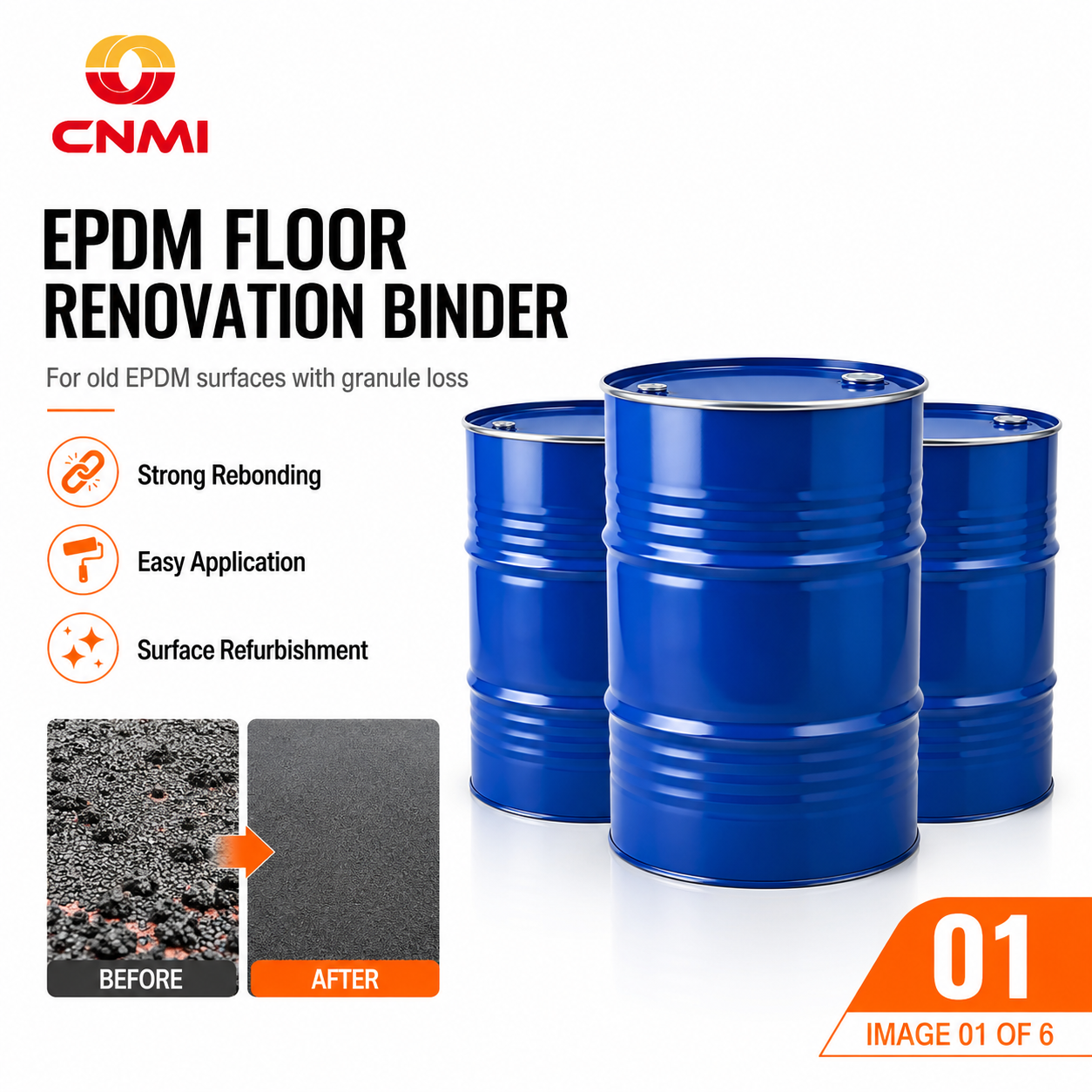
2026-06-08 EPDM (Ethylene Propylene Diene Monomer) particle ground is widely used in kindergartens, community fitness areas, campus sports fields and park trails due to its environmental friendliness, moderate elasticity, anti-slip performance and rich colors. After long-term exposure to ultraviolet rays, wind and rain erosion, high-temperature aging and frequent trampling, the ground is prone to fading, particle falling, cracking, hollowing and elastic attenuation, which not only affects the overall appearance but also brings potential safety hazards for sports and activities. This paper systematically analyzes the common aging and damage problems of old EPDM grounds, expounds the core advantages of professional renovation compared with overall reconstruction, sorts out the standardized whole-process construction process of EPDM ground renovation, and summarizes scientific daily maintenance and long-term maintenance strategies.
Read More 2026-06-05 EPDM (Ethylene Propylene Diene Monomer) granule flooring is made by mixing colored EPDM particles with PU adhesive and constructing seamless on-site, featuring anti-UV, slip-resistant, elastic and colorful advantages, widely applied in playgrounds, gymnasiums, sports courts, park walkways and aquatic surroundings. Floor thickness directly determines shock absorption, fall protection, noise reduction, wear resistance and project cost. This article classifies mainstream EPDM thickness specifications from 5mm to 50mm, matches corresponding application scenarios based on international safety standards EN1177 and ASTM F1292, and analyzes performance differences of varied thickness to provide scientific reference for venue design and material selection.
Read More 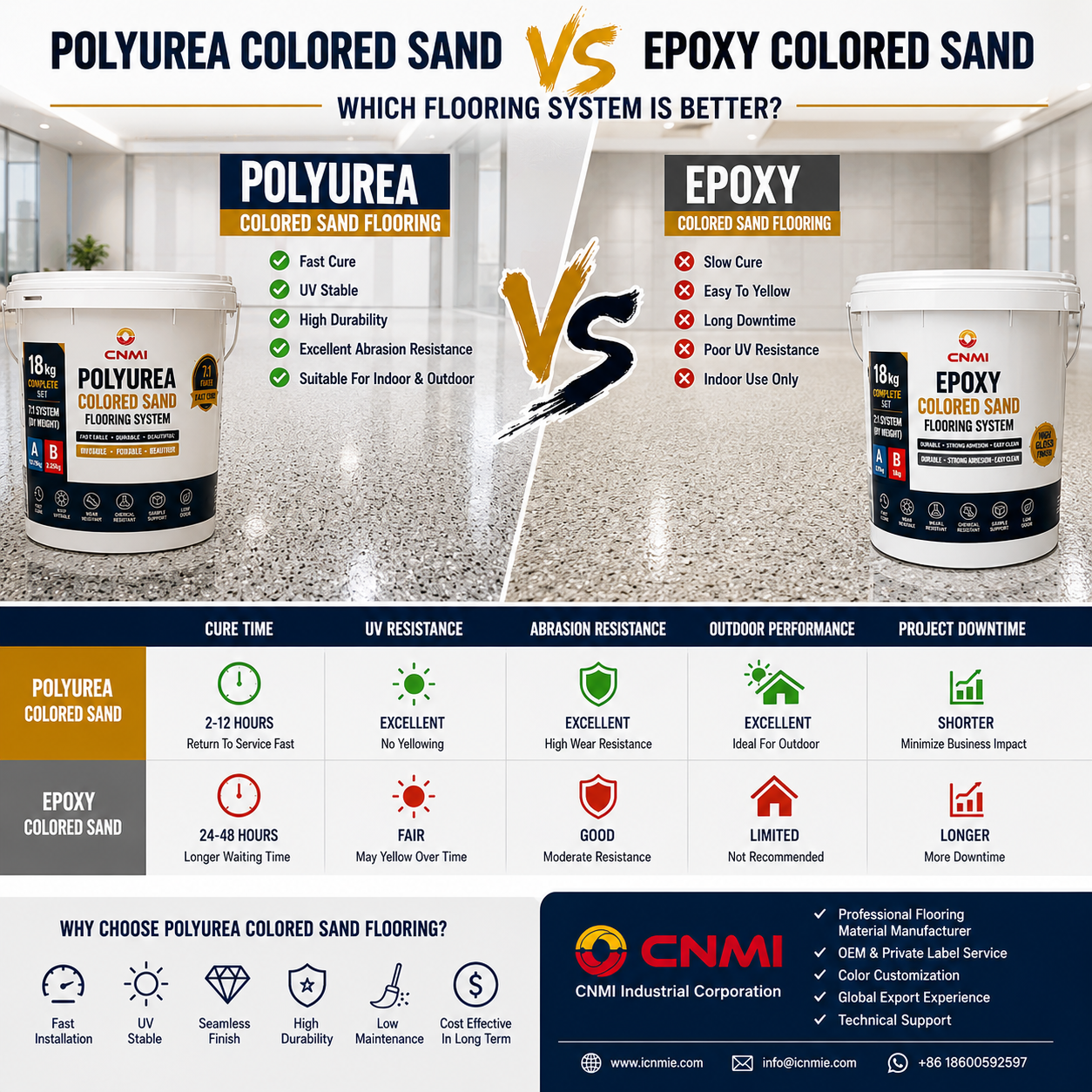
2026-06-03 Polyurea Colored Sand Flooring and Epoxy Colored Sand Flooring are two popular decorative flooring systems. While epoxy offers a cost-effective indoor solution, polyurea provides faster curing, superior UV resistance, enhanced durability, and shorter project downtime. This article compares both technologies to help contractors, distributors, and project owners select the best flooring system for commercial and industrial renovation projects.
Read More 


